
Carpenter ant control addresses large ants that tunnel through wood to build nests, through independent providers who can locate the nest and any moisture issues drawing them in.
Call (844) 924-1337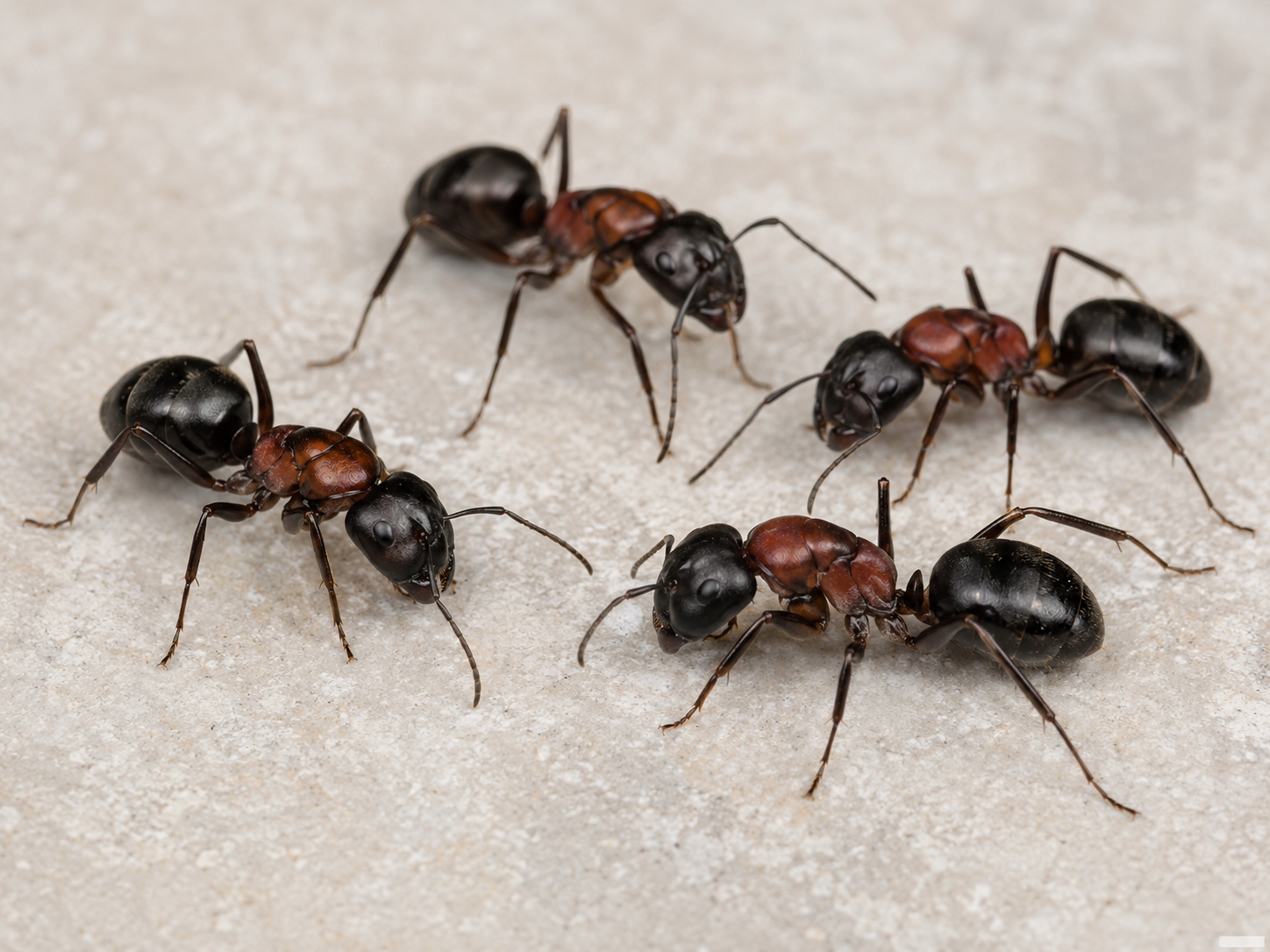
Carpenter ant control addresses large ants that excavate wood to build nests and tunnels. A common point of confusion: carpenter ants don't eat wood the way termites do, they chew and tunnel through it to create smooth galleries for nesting, discarding the wood debris rather than consuming it. The damage can still be structurally significant over time, but the mechanism and the treatment approach are different from termite control. See Carpenter Ants vs. Termites: How to Tell the Difference if you're not sure which one you're dealing with.
Carpenter ant control is a specific version of general ant control, focused on locating the nest, which is often outdoors initially and may move indoors, and identifying any moisture-damaged wood attracting them. If it turns out you're dealing with a different kind of ant, see Ant Control. Not sure what you're seeing? Call (844) 924-1337 and describe it.
A carpenter ant control visit from an independent provider typically starts with an inspection, looking both indoors and outdoors for the nest, entry points, and any wood showing signs of tunneling. Since carpenter ants are drawn to damp or water-damaged wood, the provider may also point out moisture issues worth addressing.
Treatment usually targets the nest directly along with trails and entry points, rather than a blanket application throughout the property. Exact process, products used, and any guarantees are set by the individual provider, so ask directly about what's included before booking.
Compare independent providers in your area. Free to call, no obligation.
Call (844) 924-1337A few common, honest signs it may be worth calling about carpenter ant control:
You're seeing large black or black-and-reddish ants, noticeably bigger than typical household ants.
You notice small piles of sawdust-like debris (frass) near baseboards, window sills, or wood structures.
You hear a faint rustling sound coming from inside walls, especially at night.
You see winged ants indoors, which can signal an established colony nearby, not just a few scouts passing through.
None of this requires a full-blown infestation to justify a call. If something seems off, asking is free, and a provider can tell you honestly whether a visit makes sense.
Call and we will connect you with an independent provider who handles it.
Find independent providers in your area.
Control for ant trails and colonies.
Treatment options for bed bug infestations.
Treatment options for roach infestations.
General pest protection for homes and apartments.
Reduction options for yard and property mosquitoes.
Exclusion and removal for mice and rats.
Treatment options for termite infestations.
Assessment for termite activity and damage.
Removal of nuisance wildlife from your property.
Check local service availability. Free to call, no obligation.